
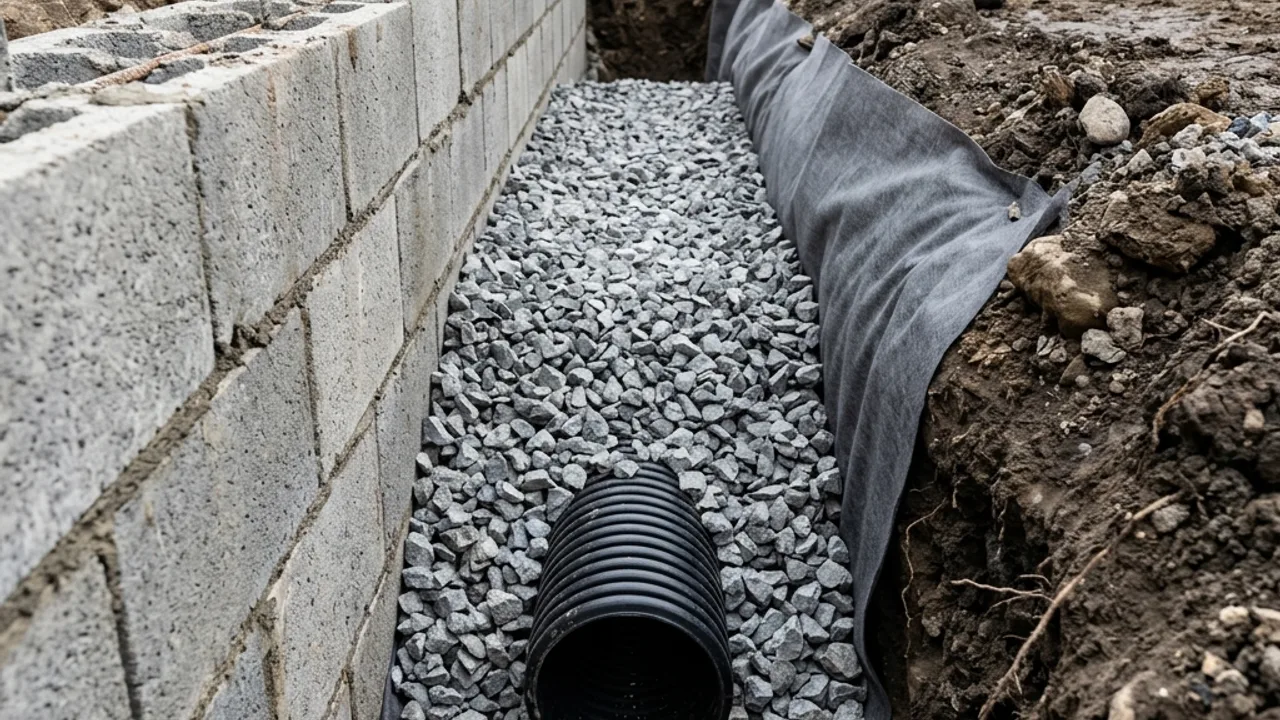
Retaining Wall Drainage & Subsoil Systems example in Newcastle NSW

Retaining Wall Drainage & Subsoil Systems

Agricultural drain, gravel and geotextile drainage behind every wall - the structural detail that stops failures in Newcastle's reactive clay and coastal sand.

Retaining walls Newcastle: what retaining wall drainage & subsoil systems is

Agricultural drain (a perforated pipe at the wall's base), free-draining gravel backfill and geotextile filter fabric, connected to the site's stormwater system. This isn't a separate product, it's the structural detail that belongs behind every wall type on this list, and it's the single biggest factor in whether a wall lasts.

Retaining Wall Drainage & Subsoil Systems in Newcastle: who it suits

Every Newcastle suburb needs this considered, but it matters most on reactive-clay ridge suburbs (Adamstown Heights, New Lambton Heights, Charlestown) where clay holds water and builds pressure behind a wall, and on Mayfield and Hamilton's estuarine flats where the water table sits closer to the surface.

Retaining Wall Drainage & Subsoil Systems: what's in scope

  • Agricultural pipe and gravel drainage
  • Geotextile filter installation
  • Stormwater connection

Choosing retaining wall drainage & subsoil systems: the decision points

  • Ag-pipe placement and fall to a genuine discharge point, not just 'downhill'
  • Gravel backfill depth and gradation behind the wall face
  • Geotextile fabric to stop clay migrating into the gravel and clogging the drain over time
  • Connection into the site's existing stormwater system rather than an ad-hoc surface discharge

Retaining Wall Drainage & Subsoil Systems cost in Newcastle

Drainage is typically scoped as part of a wall build rather than priced separately, though a standalone drainage retrofit on an existing wall (adding what should have been there originally) is a common repair-page enquiry - see retaining wall repairs. Use the cost calculator for a rough range, then get a site assessment for a real number.

Retaining Wall Drainage & Subsoil Systems vs the alternatives

There's no material alternative to proper drainage - it's not a choice between systems, it's a scope inclusion every wall system needs. The comparison that matters is between a quote that includes it properly and one that doesn't. See Retaining wall repairs & replacement.

Drainage behind a retaining wall drainage & subsoil systems

The ag-pipe, gravel and geotextile specification above applies whichever wall system you choose - drainage is the one detail that belongs behind every wall type on this list.

Retaining Wall Drainage & Subsoil Systems across Newcastle

Pick your suburb for the local notes, or submit the form for a free review.

Retaining Wall Drainage & Subsoil Systems in Merewether Coastal blocks that fall from the Bluff and Scenic Drive down toward the beach, where dune sand sits over… Retaining Wall Drainage & Subsoil Systems in The Junction A tight inner-city grid sitting only a few metres above sea level, where the level changes are small but the… Retaining Wall Drainage & Subsoil Systems in Cooks Hill Terrace-house streets that step down from The Hill ridge onto old low-lying swamp ground, so drainage decides… Retaining Wall Drainage & Subsoil Systems in The Hill The escarpment directly above the city centre, where sandstone benching, heritage frontages and very old… Retaining Wall Drainage & Subsoil Systems in Hamilton Flat, low-lying ground behind Beaumont Street that started life as the Borehole coal township, so filled land… Retaining Wall Drainage & Subsoil Systems in Mayfield Land that falls from the Main Northern railway line down to the Hunter River flats, mixing old industrial… Retaining Wall Drainage & Subsoil Systems in Stockton A sand peninsula with dunes over 30 metres on the ocean side and marshland to the west, where low-cohesion… Retaining Wall Drainage & Subsoil Systems in Lambton Old Lambton Colliery ground around Lambton Park, where Lambton Ker-rai Creek, historic mine workings and… Retaining Wall Drainage & Subsoil Systems in New Lambton Heights The 105-metre ridge behind John Hunter Hospital and Blackbutt, the steepest residential ground in the inner… Retaining Wall Drainage & Subsoil Systems in Adamstown Heights Ridge-and-gully blocks around 64 metres up, where reactive clay over weathered Coal Measures gives long rear… Retaining Wall Drainage & Subsoil Systems in Kotara The flatter valley floor between the Heights ridges, where most retaining is modest rear-boundary cut and… Retaining Wall Drainage & Subsoil Systems in Wallsend Ironbark Creek floodplain wrapped around the old Wallsend and Plattsburg colliery townships, so overland flow… Retaining Wall Drainage & Subsoil Systems in Fletcher The newest ridge-country subdivision on the western edge of the city, where house pads were benched into the… Retaining Wall Drainage & Subsoil Systems in Charlestown At 116 metres the highest of the ring suburbs, on old South Waratah Colliery gully ground, where side and… Retaining Wall Drainage & Subsoil Systems in Warners Bay Lake-facing slopes running down to the Lake Macquarie foreshore, where terraced yards chase the view and the…

See all locations ->

Retaining Wall Drainage & Subsoil Systems - common questions

How much does a small garden retaining wall cost to build?
A small garden wall under a metre high and only a few metres long is often one of the cheaper retaining projects. Across Australia these can sometimes be done for under a couple of thousand dollars, depending on materials and access. DIY with simple blocks or timber can lower costs further, although you still need good drainage and footings. Complex access or curved designs can push even small walls into higher price brackets.
How long does it take to build a retaining wall at my house?
Most small residential retaining walls can be built in a few days once excavation and materials are organised. Larger, taller or more complex walls with engineered footings and significant drainage may take one to two weeks or longer, especially if access is tight. Weather delays and waiting on inspections can extend the timeframe. Contractors usually give a rough schedule after viewing the site.
What type of retaining wall is best for a sloping block in Merewether?
Merewether’s steep blocks often need structural retaining systems such as concrete sleeper, block or engineered stone walls rather than simple garden edging. These materials cope better with the loads from driveways, houses and coastal soils. Good drainage and erosion control are essential because heavy rain can quickly wash fines out on a slope. Many local projects use stepped or terraced walls to manage height safely.

Talk to a specialist

Ready to talk about retaining wall drainage & subsoil systems?

Free site assessment. No fixed price until we've seen your block.