
Newcastle - NSW 2289
Retaining Walls Adamstown Heights
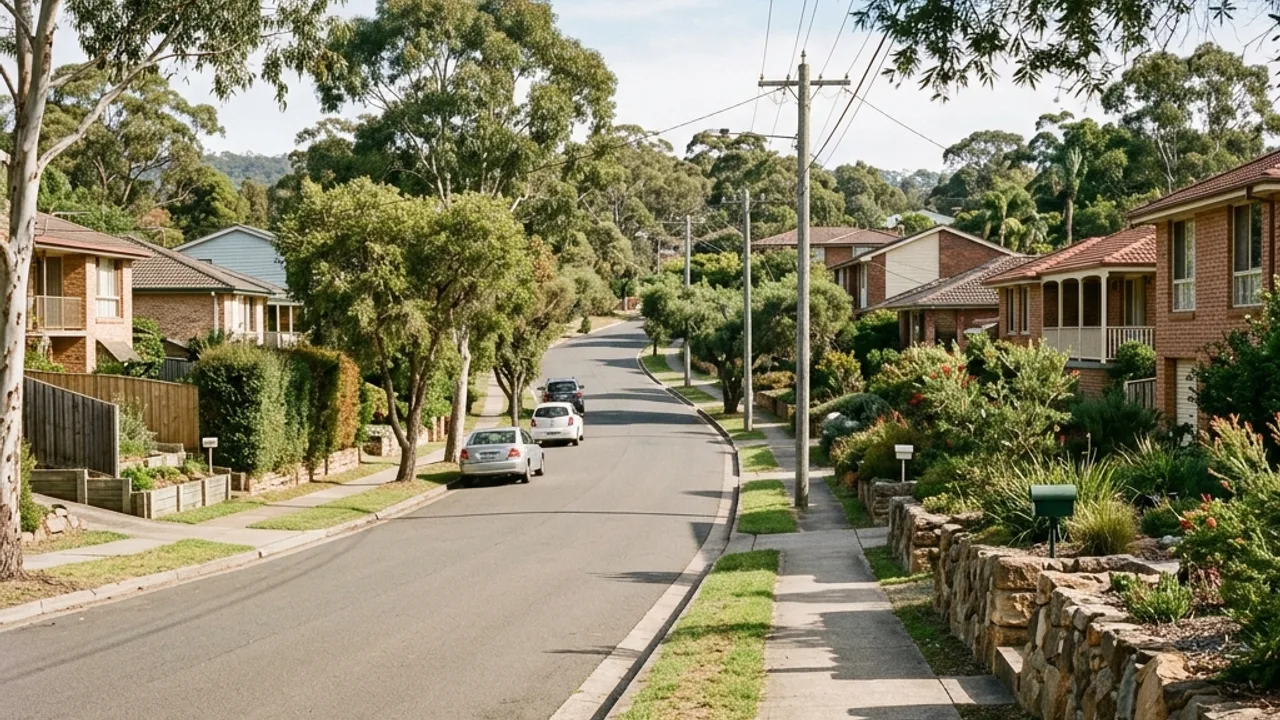
Ridge-and-gully blocks around 64 metres up, where reactive clay over weathered Coal Measures gives long rear falls and a lot of tiered garden walls.
Retaining walls Newcastle: Adamstown Heights soil and site notes
Adamstown Heights sits on reactive clay over weathered Coal Measures bedrock on ridge-and-gully blocks.
Our starting-point recommendation here is concrete sleeper retaining walls, because Adamstown Heights' reactive clay needs a structural system with real drainage behind it, which is exactly what concrete sleeper between steel posts is built for The gully sections in particular tend to need a longer wall run than the ridge-top blocks.. A site look at your actual block still decides it.
Adamstown Heights landmarks and streets
- Kotara High School
- Belair Public School
- Adamstown railway station
- Fernleigh Track
- Ellerslie Road
- Corriston Crescent
- Lexington Parade
- Montrose Avenue
- Scenic Drive
- Kinross Avenue
Also covering Kotara, Kotara South, Adamstown, Charlestown, Kahibah, Highfields nearby.
Adamstown Heights and NSW council approval
Reactive clay that shifts with moisture makes the drainage requirement inside the exempt-development standard especially important in Adamstown Heights - skipping it is the most common cause of an early rebuild here. Development applications here go through City of Newcastle. A soil report on the reactive clay is a common certifier request here, on top of the standard structural design. See engineered & approved retaining walls for the statewide standard.
Adamstown Heights retaining wall cost
Reinforced footings for reactive clay are the main added cost on an Adamstown Heights job relative to a flatter suburb. At around 64 metres elevation on ridge-and-gully ground, expect a longer wall run than a flat-block suburb for the same usable yard gain. The cost calculator gives a rough range; a site assessment gives the real number.
Reactive clay through a Newcastle year
Reactive clay is defined by what it does across seasons rather than what it looks like on the day. It swells when wet and shrinks when it dries, and a wall founded in it is being pushed and released repeatedly rather than loaded once. That is why footings here go deeper than the retained height alone would suggest, below the zone where the moisture content actually changes, and why a drainage layer behind the wall is doing structural work rather than housekeeping.
The ridge-and-gully layout adds the second factor. A gully block usually needs a longer wall run to gain the same flat area as a block on the ridge top, so two neighbours a street apart can get very different quotes for what sounds like the same job. If you are comparing prices, compare the total wall length and the footing depth assumed, not the rate per square metre. Skipping drainage is the most common reason a wall here needs redoing early.
Retaining wall services in Adamstown Heights
Pick a wall system for the notes, or submit the form for a free review.
Adamstown Heights - common questions
Are concrete sleeper retaining walls better than timber?
Do I need a retaining wall engineer’s certificate when selling my home in Newcastle?
What is the average cost per metre for a retaining wall in NSW?
How high can I build a retaining wall without an engineer in NSW?
Can I build a retaining wall myself or do I need a licensed builder?
Talk to a specialist
Ready to sort your Adamstown Heights retaining wall?
Free site assessment. No fixed price without seeing your block first.