
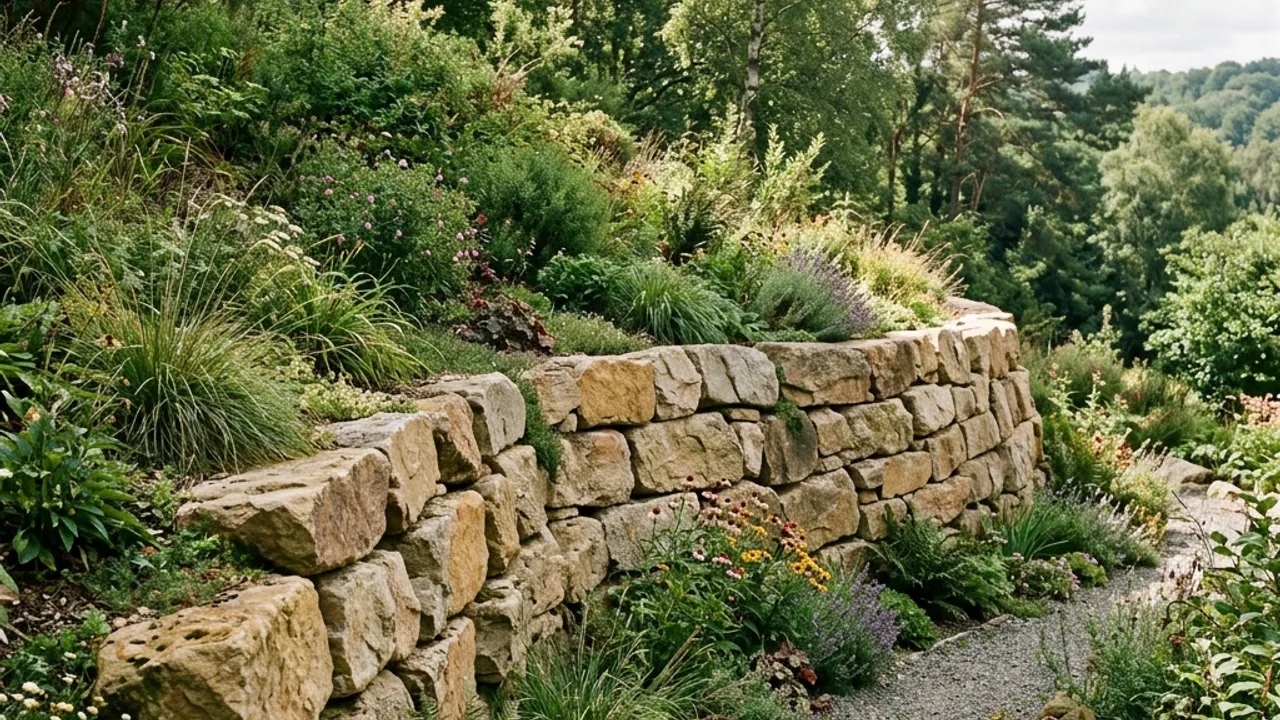
Rock & Boulder Retaining Walls example in Newcastle NSW

Rock & Boulder Retaining Walls

Natural sandstone and boulder walls battered back for a rugged, free-draining finish that suits the escarpment and bushland-edge blocks.

Retaining walls Newcastle: rock & boulder retaining walls explained

Natural sandstone block or boulder walls, battered back into the slope for a free-draining, rugged finish. This is the system for a natural material look, particularly on escarpment and bushland-edge blocks where a raw concrete face would look out of place.

Rock & Boulder Retaining Walls in Newcastle: who it suits

The Hill and Merewether's heritage-adjacent, escarpment blocks suit sandstone particularly well - it sits naturally against the older streetscape and coastal bushland character. It's a strong option anywhere the brief calls for a natural-material retaining wall over an engineered concrete look.

Rock & Boulder Retaining Walls: what's in scope

  • Sandstone block walls
  • Boulder walls
  • Natural stone landscaping

Choosing rock & boulder retaining walls: the decision points

  • Sandstone block (more uniform, easier to source locally) versus boulder (more rugged, variable sizing)
  • Battering angle - laying the wall back into the slope for stability and drainage
  • Whether the retained height and site still needs formal engineering
  • Access for placing large stone, which can be a real constraint on tight blocks

Rock & Boulder Retaining Walls cost in Newcastle

Natural stone typically costs more than timber and sits comparably to or above concrete sleeper, reflecting the material cost and the equipment needed to place larger blocks. Boulder walls can vary significantly in price depending on stone size and source. Use the cost calculator for a rough range, then get a site assessment for a real number.

Rock & Boulder Retaining Walls vs the alternatives

Compared with besser block, sandstone gives a natural finish that ages well rather than a rendered, uniform surface, generally at a higher material cost. Compared with gabion, it's a solid wall rather than a permeable rock-filled structure, which changes the drainage design. See Gabion retaining walls.

Drainage behind rock & boulder retaining walls

Even the best-built rock & boulder retaining walls still need agricultural drain, gravel backfill and geotextile fabric behind them to actually last - see retaining wall drainage & subsoil systems for the detail.

Rock & Boulder Retaining Walls across Newcastle

Pick your suburb for the local notes, or submit the form for a free review.

Merewether Dune sand over coal-measures bedrock, so cut yards below Scenic Drive need drainage sorted first. The Junction Small level changes on flat inner-city ground, but nearly every wall lands hard against a boundary. Cooks Hill Terraces stepping off The Hill onto old swamp ground, where drainage sizes the wall before height does. The Hill Sandstone benching under heritage frontages, with very old boundary walls sitting close to the next one. Hamilton Filled Borehole township land and a shallow water table, so footing depth matters more here than slope. Mayfield Old industrial fill grading into estuarine clay as the land falls away toward the Hunter River flats. Stockton Low-cohesion peninsula sand between the dunes and the marsh, where scour control decides the whole job. Lambton Historic colliery workings and Ker-rai Creek cross-fall turning up in the same Lambton Park backyard. New Lambton Heights The steepest inner-west ground, where benched driveways above the hospital add surcharge to the wall. Adamstown Heights Reactive clay over weathered Coal Measures, giving long rear falls and tiered garden walls as standard. Kotara Flatter valley floor between the ridges, where the stormwater connection back to the street sets the detail. Wallsend Ironbark Creek overland flow and the old Plattsburg mine workings both belong in the wall design here. Fletcher New ridge-country pads benched into the slope, so the batter between two fresh lots is the wall in question. Charlestown Steep side and rear falls on old South Waratah gully ground, with many blocks already part-terraced. Warners Bay Lake-facing terraces chasing the view, where the discharge point for wall drainage needs settling early.

See all locations ->

Rock & Boulder Retaining Walls - common questions

Are gabion retaining walls suitable for Newcastle backyards?
Gabion retaining walls, made from rock‑filled wire baskets, are used in many Australian yards for both retaining and decorative purposes. They handle drainage well and suit sites where water flow and erosion are an issue. In Newcastle, they can work on sloping blocks and creek lines, but the look is more rustic or industrial than smooth concrete or masonry. They still need proper design for height and loading, especially near structures.
Do I need a retaining wall engineer’s certificate when selling my home in Newcastle?
While there isn’t a blanket rule that every retaining wall needs an engineer’s certificate for sale, buyers and solicitors in Newcastle often ask for evidence of compliance on large structural walls. If a wall was built without approvals or by an unlicensed person, it can raise questions during conveyancing. Having engineering drawings or certificates can reassure purchasers and valuers. Many sellers obtain documentation or inspections for significant walls before listing their property.
Can I put a fence on top of my retaining wall in NSW?
Adding a fence directly on top of a retaining wall changes the loads on the wall and can affect its compliance with NSW building rules. For higher walls or fences, councils often require engineering to confirm the combined structure is safe. In many cases the fence posts are better set behind the wall rather than attached to it. Always check with your local council or builder before planning a wall‑and‑fence combination.

Talk to a specialist

Ready to talk about rock & boulder retaining walls?

Free site assessment. No fixed price until we've seen your block.